Ballpoint, gel, rollerball, fountain pen, erasable, fineliner: all six write, but not in the same way. What changes from one to the next is the ink, and with it the drying time, the line width and the risk of smudging. This guide explains how to read 0.5, 0.7 or 1.0 mm on a pack, which pen to choose for a left-hander, for primary school, for an exam or for Arabic calligraphy, and how to handle refills and corrections.
Six families, three kinds of ink
A ballpoint pen uses an oil-based ink. It is thick, dries almost at once and does not soak through paper. You press a little harder and the line is less dark. The ballpoint pens range is the largest in the shop.
A gel pen uses a water-based ink thickened into a gel. The line is darker and more even, and the hand glides without pressing. The trade-off: the ink needs a few seconds to dry. Gel pens suit long writing sessions.
A rollerball runs on liquid ink, even more fluid than gel. It writes with no effort but puts more ink on the paper: on a thin sheet the line can show through on the back. The shop has a small selection of rollerball pens.
A fountain pen feeds liquid ink through a metal nib by capillary action. The line changes with angle and pressure, which is what shapes handwriting. It needs paper that does not absorb too much and a longer drying time.
An erasable pen is usually a gel pen with heat-sensitive ink: the rubber tip warms the ink by friction and makes it invisible. A fineliner has a fibre tip and water-based ink. It is used for technical drawing, underlining and diagrams.
Quick comparison
| Type | Ink | Drying | Line | For a left-hander |
|---|---|---|---|---|
| Ballpoint | Oil, thick | Very fast | Fine, lighter | Safest |
| Gel | Water + gel | A few seconds | Crisp and dark | Yes in 0.5 mm |
| Rollerball | Liquid | Slow | Wide, very fluid | Smudge risk |
| Fountain pen | Liquid | Slow, depends on paper | Variable | Difficult |
| Erasable | Heat-sensitive gel | Like a gel | Medium, a little pale | Yes |
| Fineliner | Water, fibre tip | Fast on matte paper | Very fine and even | Yes |
0.5, 0.7, 1.0 mm: what the number means
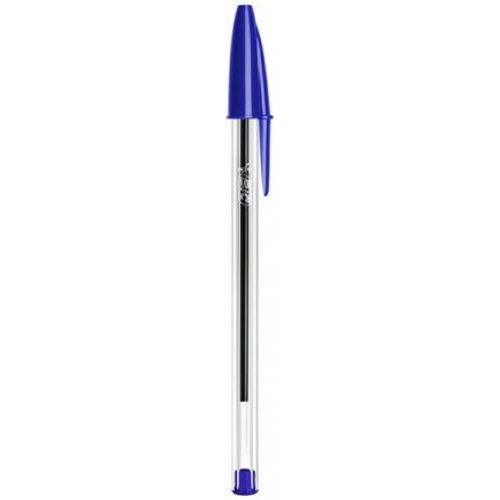
The number printed on a ballpoint or gel pen is the diameter of the ball, not the width of the line. The real line is narrower. A concrete example: the Bic Cristal Original blue has a 1.0 mm tip, and its product sheet gives a line of about 0.32 mm.
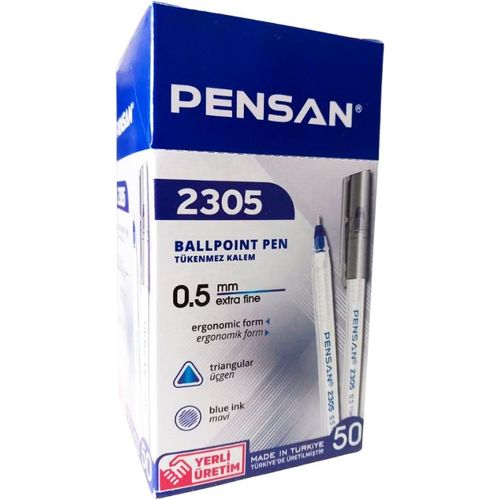
- 0.5 mm: fine tip. For small handwriting, tight Seyès ruling, the dots of Arabic letters, annotations. The Pensan 2305 0.5 mm is a ballpoint example.
- 0.7 mm: the most common medium size in gel. Easy to read without loading the page.
- 1.0 mm: medium tip in ballpoint. Because oil ink flows sparingly, a 1.0 mm ball gives a line close to that of a 0.5 gel.
At the same number, a gel pen draws wider and darker than a ballpoint, because more ink flows. To compare two pens, try them on the same sheet.
Left-handers: avoiding smudges
In Latin script, a left-hander’s hand moves over what it has just written. Any ink that is still wet ends up on the side of the hand and on the next line.
- Pick an ink that dries fast: oil-based ballpoint first, then a 0.5 mm gel, which lays down less ink than a 0.7.
- Avoid rollerballs and fountain pens for fast note-taking.
- Test on the actual notebook paper: coated or very smooth paper slows drying.
A useful point in Morocco: Arabic is written right to left, so it is a right-hander’s hand that passes over the fresh line. A right-handed pupil who smudges in Arabic but not in French has the left-hander’s problem, with the same fix.
Which pen for which use
Primary school
School lists often ask for a blue pen for writing and other colours (red, green, black) for underlining and corrections. A capped ballpoint remains the simplest: it does not leak in the pencil case and does not dry out when the cap is put back. A fountain pen helps form joined letters, but it needs ink, cartridges and patience. For children who cross out a lot, an erasable pen keeps the notebook clean.
Exams
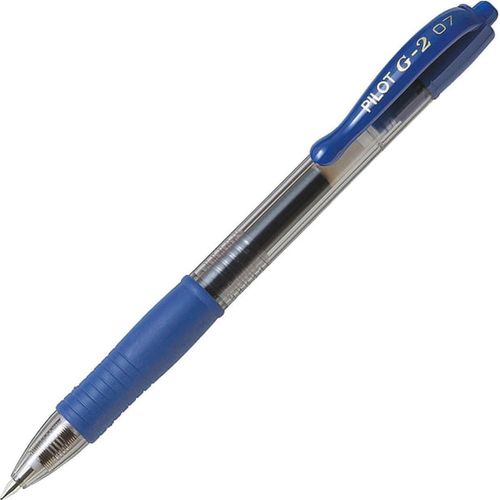
Take two identical pens, blue or black as the instructions require, already tried. No brand-new untested pen on the day. Avoid erasable ink on an exam paper: heat can make it vanish, and text that can disappear has no place on an official document, a cheque or a contract. A 0.7 gel such as the Pilot G2-7 Grip blue writes fast without pressing, which tires the hand less over a long paper. Left-handers will prefer a ballpoint.
Arabic calligraphy
Calligraphy needs thick and thin strokes, so a flat tip cut at an angle, like the traditional qalam. A ballpoint, gel pen or fineliner gives a constant line: fine for everyday Arabic writing, not for calligraphy. Among the fountain pens, check the nib shape before buying: a round nib (F or M) writes, a broad flat nib draws the thick and thin strokes.
Drawing, diagrams, notes
A fineliner gives a fine, constant line with no smudging on matte paper. It works for biology diagrams, geography maps and colour underlining. On glossy paper it dries poorly.
Refills and cartridges
A capped disposable pen is replaced whole. A good retractable pen takes refills, so you keep a comfortable barrel. The Pilot BLS-G2 0.7 mm refill, pack of 12 fits the G2 and the other models listed on its sheet (B2P, G-Knock). Always check the refill reference and length: two refills from the same brand are not necessarily compatible.
For a fountain pen, look at the cartridge format stated. Many school models take the short international cartridge, others a brand-specific format. Buy cartridges together with the pen.
Correcting: erasable pen or correction pen
An erasable pen corrects without leaving a mark. The Pilot FriXion Clicker 0.7 is a retractable gel pen with heat-sensitive ink: rub with the pen’s eraser and the text disappears. Keep it away from heat, the same reaction can wipe a page.
For regular ink you need a correction pen, with white fluid and a metal tip. Shake before use, press the barrel gently to control the flow, then wait until the white is dry before writing over it. A 4 ml size takes less room in the pencil case, a 7 or 8 ml holds about twice as much fluid.
Our advice
- Primary school: capped ballpoints in four colours, plus an erasable pen if the child crosses out a lot.
- Middle school, high school, exams: refillable 0.7 gel or 1.0 ballpoint, always two of them, never erasable on an exam paper.
- Left-hander: oil-based ballpoint or 0.5 gel, paper that is not too smooth.
- Right-hander who smudges in Arabic: the same settings as a left-hander.
- Small handwriting, tight ruling: 0.5 mm tip.
- Arabic calligraphy: broad flat nib, no ballpoint or gel.
- Diagrams and maps: fineliner on matte paper.