The school supply list often arrives the day before term starts, copied by hand or sent as a photo to the parents’ group. It changes from one school to the next, but the core stays the same from one level to another. Here is what shows up on almost every list, from primary school to high school, and the questions to ask before buying.
Before buying: three checks
- Wait for the official list before buying notebooks. The size (24x32, A4 or small format), the page count and the ruling are set by the teacher, and that is where mistakes cost the most.
- Go through last year’s things. Rulers, compasses, pencil cases, calculators and school bags often last a second year. A pen that still writes does not need replacing.
- Note the colours asked for. Many schools give each subject its own colour of notebook cover or display folder. Buying them from the start saves a second trip.
Primary school: years 1 to 6
In primary school, children write a lot and tidy up little. The list is about writing and drawing.
- Notebooks in small format (17x22) or 24x32, often with Seyès ruling to learn to shape letters.
- HB pencils, a white eraser and a sharpener with a container, so shavings stay out of the pencil case.
- Blue, red, green and black pens. In years 1 and 2, some schools only ask for a pencil.
- Colouring pencils and felt pens, a glue stick and round-tip scissors.
- A slate with its marker and cloth for the youngest classes.
- A school bag sized for the child and a pencil case big enough for everything.
To choose colouring supplies by age, see the guide pencils, felt pens or gouache.
Middle school: years 1 to 3
In middle school the number of subjects goes up and every teacher has their own habits. Large notebooks (24x32 or A4) often replace the small format.
- A full geometry set: 30 cm ruler, set square, protractor and a compass that holds the pencil firmly.
- A middle-school scientific calculator. The maths teacher often names a model or the functions needed.
- Display folders to keep handouts, one per subject if the school asks for it.
- A homework notebook or a diary to write down assignments.
- Highlighters in two or three colours for lessons to learn.
High school: common core and baccalaureate
In high school, students take more notes and write longer answers. The list gets shorter, but each item is used for longer.
- Thick notebooks (192 or 288 pages) or ring binders with loose sheets, depending on the teacher.
- A more complete scientific calculator for science streams, with equations and statistics. The guide which calculator from middle school to university covers the levels.
- Pens the student actually likes writing with: exams mean whole pages by hand. The guide ballpoint, gel, rollerball or fountain pen helps choose.
The school bag: worth getting right
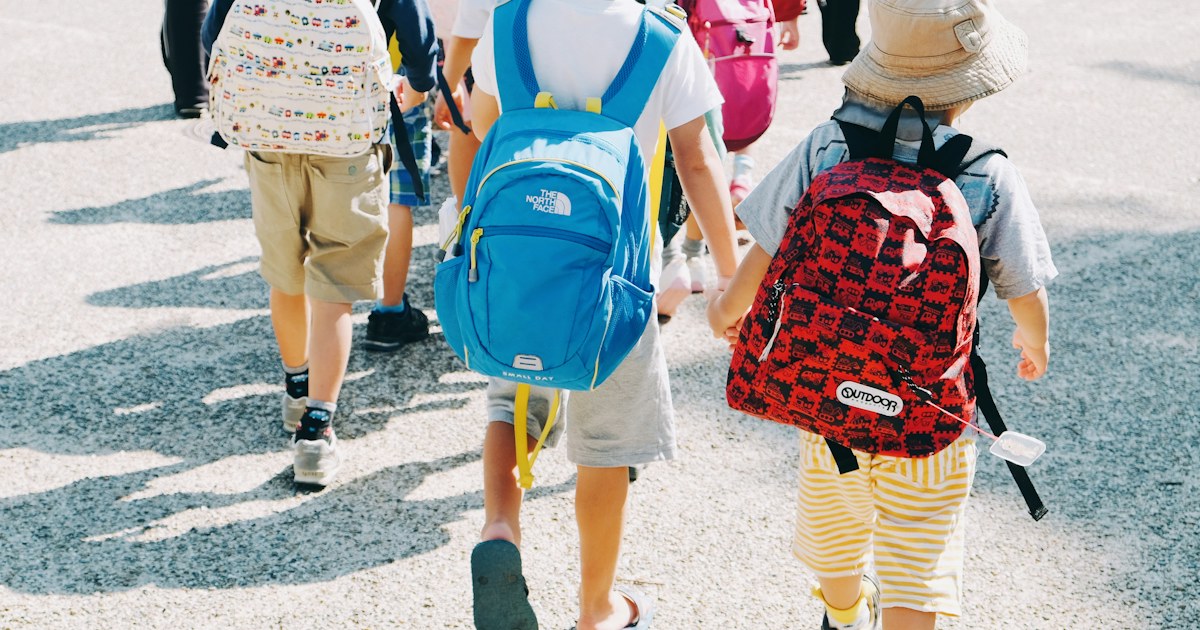
A bag that is too heavy tires the back. A common recommendation is that a full bag should not weigh more than 10% of the child’s weight. Two wide padded straps, a reinforced back and compartments that spread the load matter more than the print. For younger children, a wheeled bag helps on flat ground but is heavy on stairs. The guide school bag, backpack or wheels compares the three.
Notebooks: the longest part of the list
Size, page count, paper weight, Seyès or small squares, plastic or card cover: every detail on the list has a reason. The guide notebook sizes, pages and ruling explains how to read them without mistakes.
Label and cover from day one
A name on every notebook, pencil case and calculator prevents most losses. Covering card-cover notebooks keeps them in shape until June. Plastic-cover notebooks already resist water and folding and usually need no cover.
Keep a small stock for the year
Pens, glue and notebooks for the main subject run out fast. Keeping a few spare pens, a glue stick and one or two notebooks in the most used size at home avoids last-minute shopping in the middle of term.